Is Surgery Becoming a Spectator Sport? – Bombay Times, Downtown

‘Come and watch a live surgery being performed with the latest technology’ reads the latest surge of invites from the medical world. Are we going the western way where reality shows are making a spectator sport out of surgeries?

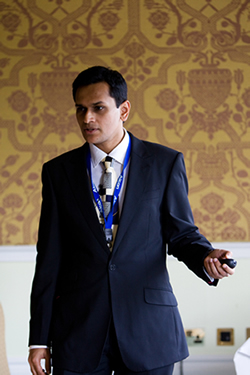
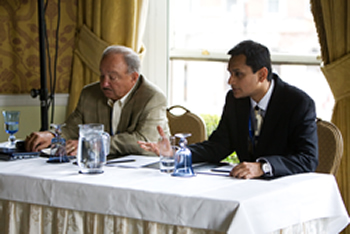
“Live surgery is not new to India. A surgery being performed is relayed to the target audience, which comprises of medical students, general practitioners, media,” informs Dr. Ameet Pispate, orthopaedic surgeon who is credited to be the First Asian to perform the hip resurfacing technique. “The purpose is to create an awareness of new surgery techniques. It goes against medical rules to relay it to lay people.” He does not include the recorded version of the surgery, which is given to the relatives of the patient. These are now considered routine with the Shroff Eye Hospital. “Relatives watch the surgery taking place on the monitor providing transparency,” Says Dr. Anand Shroff, who conducted live surgery with the latest LASIK laser vision correction, with the media present in large groups.

Medics, at large, deny that there is any self-promotion involved in having live surgeries. “It is not self-promotion, but rather a promotion of new techniques to make people aware of it,” says Dr Sanjay Borude, anti-obesity surgeon. “One can even train even train students from other countries through live transmission of the surgery.” There, however, is a thin line between educating about a technique and promoting. “The medical world does not allow for self-promotion, at least not in allopathy,” informs Dr. Pispate who’s set to conduct a live surgery of hip resurfacing this weekend at a symposium in the city. It’ll be attended by 250 orthopaedic surgeons.

It would be interesting for the Indian medical community to note that surgeries are now being tapped as a ‘reality show’ potential abroad. Cosmetic Surgery Live on channel Five in UK has a clinic recording cosmetic surgeries live for two weeks, and the patients include some well-known local celebrities. The programme created a furore with its announcement and was slammed by many, including television viewers and professional of the medic world as something “private that should not be shown on national network and will probably start off an onslaught of copy cats.”

Dr. Shroff is aware of a similar thing happening in America and sees nothing wrong in it. “People will be less intimidated and more informed about surgeries,” he says. Dr. Pispate demurs, “A hip resurfacing or an angioplasty will require to show a part of body that I don’t think any of our patients would like to show. It’s not fair. Honestly, I don’t see surgery turning out to be a part of the reality series in India.”

With Indians quick on the uptake at the copying the West, how long will it be before they seek out the ‘lovable heart’ for dissection thrills?

Advance Laser Techniques for Eye Sight Correction now in India – Free Press Journal

India has joined the list of countries providing eye care with the introduction of Wavefront 400Hz Technology, in which eyesight detects like shortsightedness and farsightedness are corrected using high speed laser beams with hundred per cent success reports UNI.

The latest in laser technologies for refractive correction, the Wavefront 400Hz is equipped with computer controlled laser which ensures more precision than other laser technologies being used in the country at present. Dr. Anand Shroff, who has introduced the technology at the Shroff Eye Hospital in Mumbai, told UNI that by using it, eyesight of even those using very high power lenses could be corrected to be normal.He, however, said at an advanced age those suffering from shortsighted-ness would still have to use specs for reading etc even after going for treatment through the new techniques.The technology is called Wavefront 400Hz because in it laser beams with frequency of 400 Hz are used while in the existing facilities, laser beams with frequency of only 200 Hz were being used, which does not give hundred per cent precision in treatment of the detect, said Dr Shroff.

In reply to a question, he said in Delhi, eye clinics were using laser beams of only 10 to 50 Hz.

The new technology is fail-safe and error-free as it has an automatic guided precision laser which impinges the eye at 400 times each second, with a computer controlled eye-tracking mechanism. The older laser techniques have manual eye-tracking and larger beam width, putting the patient to risk of errors.

The Wavefront Hz technology has the most sensitive eye tracker in the world to ensure perfectly accurate and well centered treatment, with absolutely no side effects or possibilities of error.

The new techniques maps a pupil-sized part of the cornea at 168 points.
This mapping helps identify the corrections required to compensate for the refractive problems.”The eye is one of the most sensitive parts of the body and we often treat it as commodity, choosing the treatment that is cheapest,”Dr Shrof said.

The total cost of correcting sight detects through this technology is low, while this treatment cost about five times more in the developed countries, he said.

Others clinics in the country using a laser beam of much low speed were doing this treatment only at a cost of Rs 10,000 to 25,000. But, he said, the eye was the most precious organ of the human body and its care should not be compromised on financial considerations.

He said the technology was launched worldwide only in January this year and for the first time used in the country in Mumbai in March. In Asia, only Singapore and china were at present using this technology.

He said the cost of the entire set of machinery and equipment for Wavefront 400 Hz was Rs three crore.

In reply to a question, Dr Shroff said that since March they had treated 250 persons and all of them successfully so far.

Mixing Treatment With Pleasure – Bombay Times, Downtown

More than it being a trend of boutique clinics, which is quite limiting, I would say the slant is in providing a happy hospital experience,” says Dr. Anand Shroff, Shroff Eye Clinic News – There’s a whole new breed of doctors out there who are getting active in trying to get back the old friendly doc back in the neighbourhood. For starters, they are doing everything they can to remove the look and smell of all things hospital, and replacing it with hospitality through a modified version of the intimidating structure called boutique clinics.

“Patients in the US are unhappy lot, where the next appointment with their doctor comes only after 15 days. The entire business works on quantity, and a doctor is able to give only 8 minutes of his times to each patient. Boutique clinics takes all this into consideration and works at removing the intimidating environment around the patient, and facilitates a more personal communication with the doctor. For that doctor reduces the number of patients he consults which improves quality,” informs Dr. Anniruddha Malpani of Malpani Clinic, the one stop destination for fertility, infertility and IVF (In Vitro Fertilisation).

Besides a more open communication, the patient is king in a boutique clinic. Right from the consultation to post operation procedure, the doctor makes sure that the patient feels at home. It includes removing all the greens and whites of a hospital and replacing it with a more warm, friendly ambience of pastel colours, printed sheets, paintings, efficient, friendly staff and transparency. “More than it being a trend of boutique clinics, which is quite limiting, I would say the slant is in providing a happy hospital experience,” says Dr. Anand Shroff, Shroff Eye Clinic. “We stress on comfort and transparency. Down from the first call that we entertain of the patient to follow-ups, there’s an open communication,” says Dr. Shroff. However Dr. Sunil Bhoolabhai goes a step forward and lights up his dental clinic in scented candles with music playing in the background. The patient can also watch television or a DVD while the treatment is on. “Work goes beyond the obvious and that’s what I try to provide to each and every clinic, a blend of the science of dentistry entwined with aesthetics,” says Dr. Bhoolabhai adding, “My office is warm relaxed and comfortable space where the intimidating effect of a hospital/clinic is blended into the relaxed ambience of a spa with the help of candles, fragrances, large screen entertainment, mood lighting, the wafting aroma of fresh coffee etc, all without compromising hygiene and infection control.”

Each room in Malpani Clinic not only sees to the colour co-ordination but also ensures an Internet, provides menu for the patient at no cost. They also ensures that all the tests and operations is done in one place. “The patient’s don’t have to run around. Our emphasis is on being patient friendly, especially in cutting down the rift between the doctor and a patient. And we never underestimate a patient, from a model to one in purdah,” says Dr. Anjali Malpani. Hospitals like Wellspring Healthcare, Wockhardt Heart Hospital, NM Medical besides offering luxury also offer health packages that can be gifted to a member of your family.

With doctors like Dr. Shroff and Dr. Malpani talking of waiving off visiting charges and making an emotional investment in patients, it’s does seems like boutique clinics are providing the perfect setting for the return of the friendly doc.

India Launches World’s Latest Refractive Laser Correction Technology – Deshdoot Times,Nashik

The world’s most advanced technology for customized laser correction – the Wavefront 400Hz Technology was launched at PerfectWave LASIK Centre at Shroff Eye Hospital in Mumbai.The world’s most advanced technology for customized laser correction – the Wavefront 400Hz Technology was launched at PerfectWave LASIK Centre at Shroff Eye Hospital in Mumbai.

The latest in laser technologies for refractive correction, the Wavefront 400Hz Technology is equipped with a completely computer controlled laser. This provides patients the highest level of safety, accuracy and reliability available in laser technology. Further, the technology is fully customized to the individual patient’s eye. The 400Hz technology has the most sensitive eye tracker in the world to ensure perfectly accurate and well-centered treatments, with absolutely no side effects or possibilities of errors. With the launch of the Wavefront 400Hz technology, people in India will have access to technology and precision available only at select centers in the world. Of the various technology options that we had available, we chose the 400Hz Wavefront technology since it is very safe and error-free. Further it allows patients with a much higher eye power to be treated safely and also can correct poorly done laser techniques, says Dr. Anand Shroff, Chief Surgeon, PerfectWave LASIK Centre and renowned Eye-care specialist.

Dr. Shroff elaborated on the technical advantages of the 400 Hz Wavefront and said “The eye is one of the most sensitive part of the body and we often treat it as a commodity choosing the treatment that is cheapest. Patient awareness is critical to better treatment and it will be our continued effort to educate the people about advantages of using the Wavefront 400 Hz as against using older laser technologies for corrective treatment for the eye.”

The Wavefront 400 Hz technology has treats the eye at 400 times each second, with a computer controlled eye tracking mechanism. The Wavefront 400 Hz stands a head over the older laser versions available in India. The older and discount lasers use antiquated technologies like manual eye tracking low frequency of treatment, larger beam width, putting the patient to the risk of errors.

The Wavefront 400 Hz technology, on the other hand, maps the cornea at 168 individual points through an unique Abberometer. This mapping helps identify the corrections required to compensate for the refractive problems in the internal optics of the eye. The cornea is then treated by small-spot laser beams to compensate for the correction making the treatment completely customized and error-free for the patients. Often, it has been seen that treatment with the Wavefront 400Hz improves vision and contrast to super -nominal limits.

Eye, Me, Myself – The Indian Express Newsline

His first-ever surgery left Sunil Wadhwa gushing. “Quick, painless and hassle free,” says the 20-year-old, describing the laser treatment that rid him of the “difficult to manage” contact lens he had worn for almost eight years.

”There’s a Lot of social stigma attached to lenses and glasses. Plus getting into college, without lenses, was something i looked forward to,” says Wadhwa. ‘”Worrying about staying over at a friend’s place and carrying the lens solution is no longer a hassle.”

The third year commerce student at HR College. Churchgate, who once had an eye power of minus 4 now has 20/20 Vision Wadhwa convinced his father, a gynaecologist, that now was the right time to have the Rs 30,000 laser guided corrective surgery known as LASIK or Laser Assisted in-situ Keratomileusis.

According to opthalmic surgeons, the average age of people undergoing refractive surgeries is 35. In fact, says Dr Sanjiv Shah, an opthalmic surgeon in Tardco, “about 50 percent of my LASIK clientele is in their mid-20s.”

The surgery takes an average of. 20 minutes, requires no stitches and allows the patient to return to the classroom or office in a day or two.
LASIK involves reshaping the cornea the external surface of the eye to correct near sightedness, farsightedness and astigmatism (an eye disorder in which the lens is severely curved).

One of the latest advances in LASIK treatments is the WaveLight Allegretto laser platform, which can “correct even internal errors of the eye such as night vision, glare, besides correcting numbered vision,” says ophthalmic surgeon Dr Anand Shroff of Shroff Eye Hospital in Bandra.

The device has one of the fastest eye trackers, which ensures accurate and safe treatments. The customised treatment, with a 3-D map of each eye is completed in a few seconds to prevent uneven drying of the corneal surface.

Globally the WaveLight Allegretto was introduced in 2002; it was used in India for the first time a year later.

According lo experts, the city’s young adults are also getting LASIK done to improve their marriage and career prospects.

“We often get harrowed parents asking us to treat their daughters’ vision far a better marital match,” says Daryus Panthakey director of Phiroze Dastoor Laser Eye Clinic in Santacruz. which performed one of the first laser vision correction surgeries in India in 1994.

LASIK treatment is, for many others, a smart career strategy.

Twenty-year-old Priti Shirke (name changed) of Tardeo knew her minus 3 vision would make it impossible for her to clear the physical tests necessary to join the police force. So she convinced her parents her father is a steel worker and her mother is a wholesale vegetable seller it was worth investing Rs 30,000 on laser vision correction.

“Treating my number was important: I couldn’t ruin my chances of a dream career,” chirps Shirke

Shirke’s surgery was done discreitly. She cleared the tests and is currently training in Nashik.

City doctors say the Rs l5,000-Rs 25,000 cost of LASIK for each eye is a third of the price abroad, but admit that it deters many patients.

“For the Indian market price is a major deciding factor. The quality of technology and surgeon is still secondary,” says Shah, ruefully.

The actual Laser treatment takes five to seven minutes:

The patient rests on a motorized bed, the head is motioned under the laser and anesthetic drops are applied in the eye.
A 3-D map called a ‘Wavefront map’ is formed to identify various higher order optical errors of the eye such that the surgeon can accurately focus the laser on these marked spots.

A soft finger-sized instrument or a lid retractor holds the eyelids open to give the surgeon clear access to the treatment area with minimal discomfort to the patient.

A precision instrument similar to a bottle opener called the ‘Microkeratome’ makes surgical corneal flap resection from each eye, exposing the inner layers of the cornea where the laser is applied.

While the patient Steadily stares at a blinking light during the procedure, the computerized laser shoots a beam of light to reshape the cornea this changes its curvature to the desired extent and corrects patient’s vision.
The resultant corneal curvature makes light entering the eye focus sharply on the retina without the need for corrective lenses.

One On One Interview of Dr Anand Shroff

This is the world’s most advanced technology for customised laser corrections and is equipped with a completely computer-controlled laser. This provides the patients the highest level of safety, accuracy and reliability available in laser technology

What is the Wavefront 400Hz, technology?

This is the world’s most advanced technology for customised laser corrections and is equipped with a completely computer-controlled laser. This provides the patients the highest level of safety, accuracy and reliability available in laser technology. It is also fully customised to the individual patient’s eye. Moreover, it has the most sensitive eye tracker in the world to ensure accurate treatment with absolutely no side effects or possibilities of errors. As of now, we have it in Mumbai, but we have many patients from Pune accessing it.

What is the advantage of this technology over the present laser treatment technology?

This technology is completely foolproof. As it allows patients with a much higher eye power, to be treated and can also correct poorly done laser techniques at the mushrooming ‘discount’ laser centers. This method avoids a number of side effects like glare and poor night vision since it helps remove the higher order errors of the eye (aberrations) unlike regular Lasik treatment, which is solely based on the prescription of glasses. Most doctors are using the 200Hz technology now and the 400 Hz helps us in giving faster treatments besides it being painless and the conditions of the eye is being checked by the instrument itself.

What is LASIK Method?

LASIK is a method of reshaping the external surface of the eye (the cornea) to correct low, moderate and high degrees of near-sightedness, astigmatism and far-sightedness. This complete eye assessment is required to check the patient’s suitability for LASIK. Tests include refraction, contrast sensitivity, pupil size, pupil reaction, retinal examination, tonometry and pachymetry. Other specialised treatments under the Wavefront technology include the aberrometry, topolyzer measurements, topography and tests for dry eye among others.

How does the technology function?

The Wavefront 400Hz technology maps a pupil-sized part of the cornea at 168 individual points through a unique aberrometer. This mapping helps identify the corrections required to compensate for the refractive problems at each of the 168 points of the eye. The cornea is than treated at each of these points by small area laser beams to compensate for the correction making treatment completely error free.

Going, going, gone

Is it really possible to knock off eye power? How safe is laser surgery that’s being dubbed as the 15-minute miracle? Active does the research for you. Plus yoga for those with OT allergy

For thousands of people, the day starts with fumbling for a pair of spectacles or a lens case. Experts claim that genetics as well as a lifestyle focussed around the computer and television is responsible for weak eyesight.

With laser eye technology improving by leaps and bounds since its inception in the ’90s, it might be time to do away with visual crutches. But as with any surgical procedure, laser surgery too can result in complications.

Here’s what you need to factor in before agreeing to the fine print.

What is Lasik?

LASIK (Laser-Assisted in Situ Keratomileusis) refers to surgery to treat refractive eye disorders including myopia (shortsightedness), hyperopia (longsightedness) and astigmatism or blurred vision.

These disorders are caused when the curvature of the lens becomes inflexible as the light rays are unable to focus on the retina, leading to blurry vision.

Laser surgery involves creating a corneal flap on the surface of the cornea, which is peeled back to operate on the cornea, followed by using a laser to reshape the cornea so that it can be realigned with the retina.

The surgery takes around 15 minutes and is done under anesthesia. It involves no stitches and the patient can be discharged on the same day.

“There is still no single health body on par with international standards, which certifies or accredits centres.

Be alert of what is being offered to you and take more time researching the procedure,” advises Dr Anand A Shroff, Cornea and Refractive Surgeon, Shroff Eye Hospital.

Different eyes react differently to surgery and patient testimonials are available on the net and document experiences ranging from “great” to “feel like Vaseline has been rubbed on my eyes”.

Types of Lasik

Broadly speaking, laser surgery can be divided into general or wavefront (custom). Wavefront is considered a better option since it uses 3D measurements of how your eyes process images and thereafter uses the laser to reshape the cornea properly, enabling 20:20 vision. There are sub-divisions in wavefront including Intralasik and Epi-Lasik. Though there is some talk of “bladeless” surgeries, creating the flap is still a process done using a microkeratome (surgical knife), except in all-laser Lasik (often called Intralasik) and Epi-Lasik procedures.

Benefits of laser surgery

  • Painless procedure
  • Better vision
  • Less or no dependence on glasses/lenses
  • Rapid recovery (patient can resume work within 48 hours)

Possible Complications And Side-Effects

Scarring of the cornea

Infections if the same blade is re-used for several operations

Under correction in which the patient might still need to use glasses or contacts, but with a decreased power

Overcorrection in which the patient might need reading glasses

Dry eyes (usually, though not always alleviated with the help of special eye drops)

Burning sensation post-surgery(usually reduces within five hours of procedure)Pre and Post Operative Care

Pre-operative care includes staying off lenses for a month before surgery as the cornea needs to get back to its original shape and be hydrated for accurate measurement. Post the surgery, avoid rubbing of the eyes or splashing water for a week. Prescribed eye drops are to be applied to prevent dryness. If you experience chronic dry eyes, redness, blurred vision or a foreign body sensation, report it to the doctor immediately.

Cut and keep DIY Guide to improve Eyesight Holistically

Yoga for your eyes

Candle gazing (Trataka): Hold your body erect and spine straight. Keep eyes centrally focused on the tip of the candle flame to reduce the area of central fixation. The smaller the area, the better the fixation.

The nasal gaze (Nasikagra Trataka): Assume a relaxed posture with neck held erect, and fix the eyes on the tip of your nose. Continue to gaze for two minutes, then close your eyes. Repeat a few times before shutting eyes for rest.

Eye exercises to boost vision

Snellan’s chart reading: This chart is printed with 11 lines of block letters, and the font size reduces as you read on. Hang the chart on a wall, and sit at a comfortable distance. Read each letter and blink. Hold a smaller chart in your hand, read each letter and then spot that letter in the larger chart. That letter will seem darker to you.

Game of ball: This involves focusing on the ball’s movements. Hold the ball in the right hand, bounce it off the floor and catch it with the left hand. Blink every time you catch the ball. Throw it up in the air with the right hand and grab it with the left hand.

5 Celebs we can’t imagine without their glasses

The silver-haired gentleman topped the list of the sexiest eyeglass-wearing celebrities, with a whopping 35% votes in a survey done by an American spectacle company. He has our vote too!

The charismatic politician with the cutest dimples ever, is also known for his classy-yet-simple-metal-rimmed glasses.

Six years since the sitcom Friends went off air, Matthew Perry is still remembered for his portrayal as the bespectacled, wise-cracking and utterly lovable Chandler Bing.

The reclusive Clark Kent, reporter for the Daily Planet, and alter-ego of the dashing Superman, is still a beloved icon eight decades since his first appearance. We can’t get enough of Kent’s charisma and smouldering demeanour behind those super-large frames.

Opticians in the UK anticipate record spectacles sales each time the movies in the Harry Potter series are released, urging Daniel Radcliffe, who plays the fictional character to comment, “Harry has managed to make specs cool again.” We couldn’t agree more.

Get the Facts

Dr Anand Shroff debunks some post-procedure theories on laser surgery

One needs to wear dark surgical glasses for a month both indoors and outdoors.

It is necessary to wear sunglasses only in the first week post-procedure. Though, it is a good idea to continue wearing sunglasses to protect eyes from UV rays.

One cannot cook or go near a gas for a long time.

This would mean that those living abroad would either starve or suffer from indigestion from ordering take-out! Medically speaking, they are allowed to do so from the next day itself.

Lasik is only for those with high powers.

One can do Lasik for even powers as low as -0.5, but the eye examination determines the fitness.

Lasik cannot be done on those with very high powers.

Thanks to today’s advanced lasers, numbers as high as -12 can be treated safely. For higher powers up to -23, there are other options like Implantable Collamer Lenses (ICL).

If you fall or have an accident post-surgery, there are higher chances of retinal detachment.

Lasik does not increase the risk of retinal detachment if done correctly. It does not change the inherent shape of one’s eyes. The retina in most people with high powers is thinner as it has to cover a larger surface area. Hence, there is the same risk as it would have been if one were to continue wearing glasses or lenses.

Don’t opt for LASIK if you:

  • Are pregnant as hormonal fluctuations can play havoc with eye power
  • Under 18 as the cornea is still developing
  • Have diabetes as diabetics typically take a long time to recover
  • Suffer from dry eyes as the surgery can aggravate the condition
  • Have eye power that has not been stable in the past year, since the power can come back
  • Have thin corneas that are damaged or scarred as the surgery erodes the surface of the cornea

How much does it cost?

The cost for laser surgery ranges from Rs 14,000 to Rs 1 lakh depending on the credibility of the doctor and the equipment used.

Conventional laser surgery will cost you around Rs 25,000 to Rs 30,000 but it is only suitable for lower powers. Laser Lasik and Epi Lasik can set you back by around Rs 80,000 to Rs 1 lakh.

Being an elective surgery, it is often not included in health insurance or mediclaim policies so, you may have to shell out the money yourself.

My experience with Lasik

I have been wearing spectacles since the age of 13. My eye power was -6, but when I got pregnant it shot up to -9 due to hormonal changes. That’s when I decided to opt for laser surgery.

The surgery was painless and over in 15 minutes flat. Post the surgery, I felt an intense burning sensation in my eyes as if someone had poured chilli powder inside and my eyes watered constantly.

The pain subsided in four hours, though. Today, I have 20/20 vision and have experienced no long-term side-effects.

3 Questions you should ask before opting for the surgery

Is my doctor experienced?

Approach an experienced eye surgeon who will check eyes thoroughly for any sign of damage to the cornea or retina to avoid complications later.

Is the equipment outdated?

Make sure equipment is up-to-date.

Is there a strict enough infection control check?

Check whether the necessary procedures to determine whether or not you are the ideal candidate (do you suffer from dry eyes? Is there corneal scarring? has your power been steady?) for the operation are carried out by your eye surgeon.